Aftermarket HUDs: Turning Your Old Clunker into a High-Tech Cockpit
You don't need a brand-new luxury car to enjoy a high-tech driving experience. With an aftermarket Head-Up Display (HUD), you can transform virtually any vehicle — no matter how old — into a smart, connected cockpit that rivals cars costing ten times more.
Whether you're driving a classic sedan 2005 or a 2015 pickup truck, here's how an aftermarket HUD can completely change the way you interact with your car.
What Is an Aftermarket HUD?
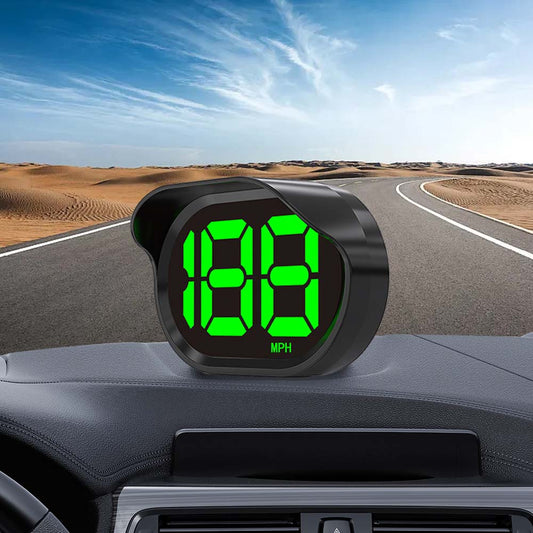
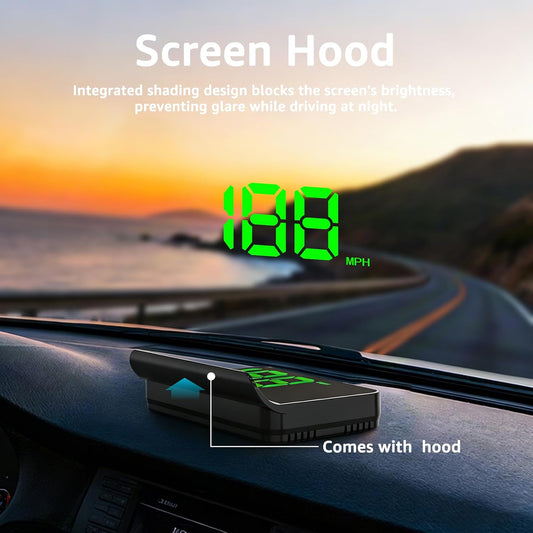
An aftermarket HUD is a device you add to your existing vehicle to project driving data — speed, navigation, engine stats — directly into your line of sight. Unlike factory-installed HUDs found in premium vehicles, aftermarket units are designed to work with any car and install in minutes without professional help.
They come in two main types:
- GPS HUDs: Plug into your 12V socket and use satellite signals to display true ground speed and navigation. Universal compatibility.
- OBD2 HUDs: Connect to your car's OBD2 diagnostic port (standard on all vehicles since 2008) to display engine data including RPM, coolant temperature, battery voltage, and fault codes.
Why Older Cars Benefit the Most
Modern cars already come packed with digital displays, driver assistance systems, and connected infotainment. But older vehicles? They're often stuck with analog gauges, no navigation, and zero real-time engine feedback beyond a check engine light.
An aftermarket HUD bridges that gap instantly. Here's what it adds to an older car:
1. Real-Time Speed Display
Older speedometers can drift out of calibration over time, especially if the vehicle has had tire size changes or drivetrain wear. A GPS HUD gives you accurate, satellite-verified speed — always precise, regardless of your car's age or condition.
2. Turn-by-Turn Navigation
No built-in navigation? No problem. GPS HUDs with smartphone connectivity can mirror directions from Google Maps or Waze directly onto your windshield. No more phone mounts, no more glancing at a screen — just clean, heads-up navigation.
3. Engine Health Monitoring
This is where OBD2 HUDs shine for older vehicles. As cars age, engine issues become more common. An OBD2 HUD gives you a live window into your engine's health:
- Coolant temperature spikes before they become overheating
- Battery voltage drops before you're stranded
- Fault codes the moment they trigger — no waiting for a mechanic's scanner
- Fuel consumption data to optimize your driving habits
For older cars especially, this kind of early warning system can save you hundreds — or thousands — in repair costs.
4. Overspeed Alerts
Older vehicles often have less precise speedometers. A HUD with configurable speed alerts keeps you aware of your exact speed and warns you before you exceed set limits — useful for school zones, construction areas, and speed camera locations.
5. A Modern Feel Without the Modern Price Tag
There's something genuinely satisfying about glancing up and seeing crisp digital data projected in your line of sight — in a car that rolled off the assembly line before smartphones existed. It's a small upgrade that makes every drive feel more connected and in control.
How Easy Is Installation?
Extremely easy. Most aftermarket HUDs are designed for zero-tool installation:
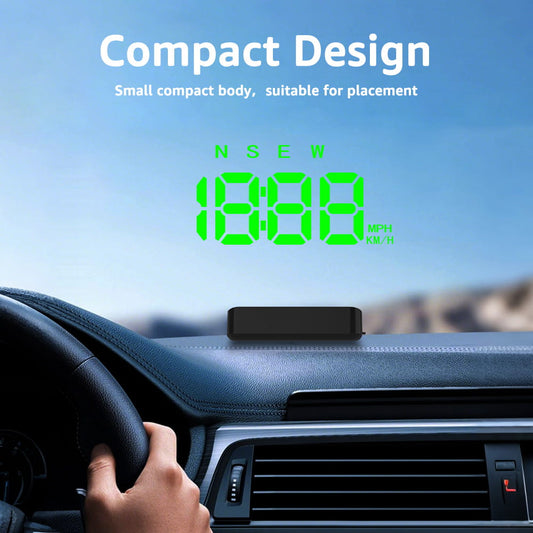
- GPS HUD: Place on dashboard, plug into 12V cigarette lighter socket, adjust angle. Ready in under 5 minutes.
- OBD2 HUD: Locate the OBD2 port under your dashboard (driver's side), plug in the connector, route the cable to the display unit, power on. Typically 5–10 minutes.
No drilling, no permanent modifications, no voiding your warranty.
What to Look for When Choosing a HUD for an Older Car
- OBD2 compatibility: Confirm your vehicle has an OBD2 port (all US cars from 2004+, EU cars from 2008+).
- Combiner screen vs. windshield projection: Older windshields may have coatings or angles that cause double images with projection HUDs. A combiner screen model avoids this entirely.
- Brightness: Look for auto-brightness adjustment so the display is readable in both bright sunlight and at night.
- Durability: Older cars can run hotter inside. Choose a HUD rated for high-temperature environments (70°C / 158°F or higher).
Real-World Impact
Drivers who add HUDs to older vehicles consistently report three things: they feel safer, more informed, and — perhaps surprisingly — more attached to their car. There's something about giving an old vehicle a new layer of intelligence that makes it feel worth keeping.
And from a purely practical standpoint, catching one engine issue early more than pays for the cost of the device.
Final Thoughts
You don't need to buy a new car to drive like you're in one. An aftermarket HUD is one of the most cost-effective upgrades you can make to an older vehicle — adding safety, awareness, and a genuinely modern driving experience for a fraction of the cost of a new car payment.
Ready to upgrade your old ride? Browse our full range of GPS and OBD2 Head-Up Displays — built to work with any car, any age, any budget.