Are Automobile Heads-Up Displays Safe? What Every Driver Should Know
Introduction
Heads-up displays (HUDs) are becoming increasingly popular in modern vehicles, projecting critical driving information — speed, navigation, and alerts — directly onto the windshield. But are they actually safe? Or do they add another layer of distraction to an already demanding task?
In this guide, we break down the science, the benefits, and the potential risks of automobile HUDs so you can make an informed decision.
What Is a Heads-Up Display (HUD)?
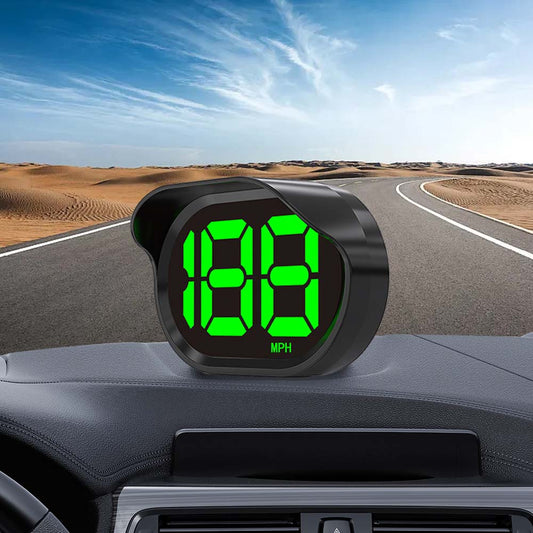
A heads-up display is a transparent screen that projects data into the driver's line of sight, eliminating the need to look down at the dashboard. Originally developed for military aircraft, HUD technology has evolved into an accessible, affordable upgrade for everyday drivers.
Modern car HUDs can display:
- Current vehicle speed
- GPS navigation turn-by-turn directions
- Engine warnings and OBD2 diagnostics
- Speed limit alerts
- Fuel level and RPM
Are HUDs Safe? What the Research Says
Multiple studies suggest that HUDs can reduce cognitive distraction compared to traditional dashboard glancing. According to research published in transportation safety journals, drivers using HUDs maintained better lane positioning and reacted faster to hazards than those frequently looking down.
Key safety advantages include:
- Eyes stay on the road: Information is displayed within the driver's natural field of view.
- Reduced head movement: Less time spent looking away from traffic.
- Faster reaction times: Critical alerts are immediately visible without searching the dashboard.
Potential Risks to Be Aware Of
While HUDs offer clear benefits, they are not without risk if used improperly:
- Information overload: Displaying too much data can overwhelm the driver. Stick to essential metrics.
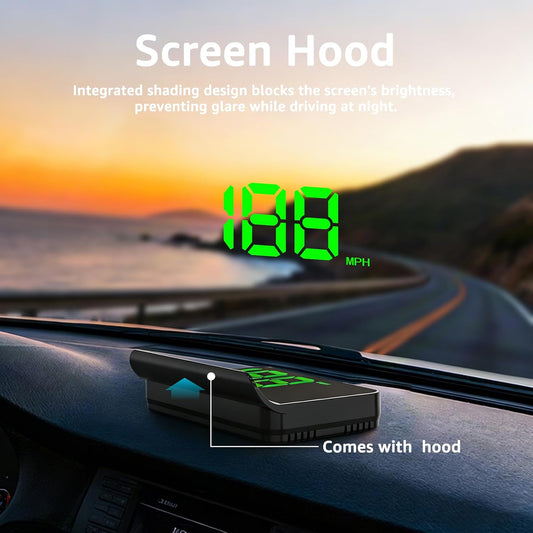
- Glare and reflections: Poor-quality HUDs may cause glare, especially in bright sunlight. Choose units with anti-glare coatings.
- Cognitive tunneling: Focusing too intently on HUD data can narrow attention. Always maintain situational awareness.
OBD2 HUDs vs. GPS Speedometer HUDs: Which Is Safer?
There are two main types of aftermarket HUDs:
- OBD2 HUDs plug into your car's diagnostic port and pull real-time vehicle data — speed, RPM, engine temperature, and fault codes. They are highly accurate and require no manual input.
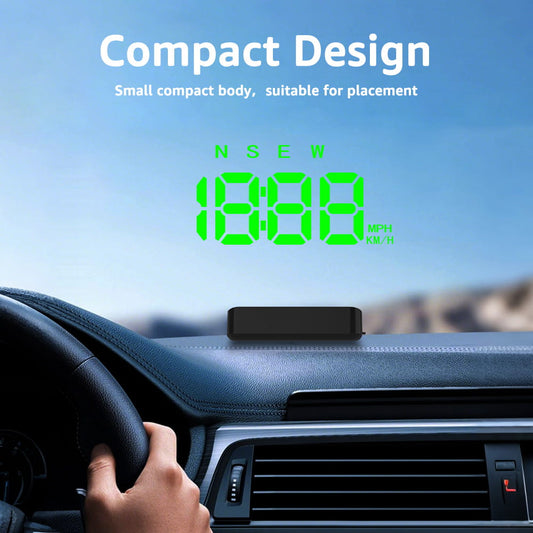
- GPS Speedometer HUDs use satellite positioning to calculate speed and display navigation data. They are easy to install and work with any vehicle.
Both types are safe when properly mounted and configured. OBD2 HUDs are ideal for drivers who want detailed vehicle diagnostics, while GPS HUDs are better suited for navigation-focused use.
Tips for Safe HUD Use
- Mount it correctly: Position the HUD so the projection falls naturally within your line of sight without obstructing your view.
- Minimize displayed data: Only show the information you truly need while driving.
- Adjust brightness: Set brightness appropriately for day and night driving conditions.
- Avoid interaction while moving: Configure your HUD settings before you start driving.
- Choose quality products: Invest in a reputable HUD with clear optics and reliable data accuracy.
Conclusion
Automobile heads-up displays are, by and large, a safe and beneficial technology when used responsibly. They reduce the need to look away from the road and keep critical information within your field of vision. The key is choosing a quality unit, configuring it sensibly, and avoiding information overload.
Ready to upgrade your driving experience? Explore our range of KUOWEIHUD Heads-up Display and GPS Speedometer designed for safety, clarity, and performance.