Does a Head-Up Display Work on Any Car? Everything You Need to Know
One of the most common questions we hear from drivers considering a HUD is: "Will it actually work with my car?" It's a fair question. With so many vehicle makes, models, and years on the road, compatibility is a real concern.
The short answer is: yes, aftermarket HUDs work on virtually any car. But the details matter. Here's everything you need to know about HUD compatibility before you buy.
Two Types of HUDs, Two Compatibility Considerations
Aftermarket HUDs come in two main types, and each has different compatibility requirements:
1. GPS HUDs
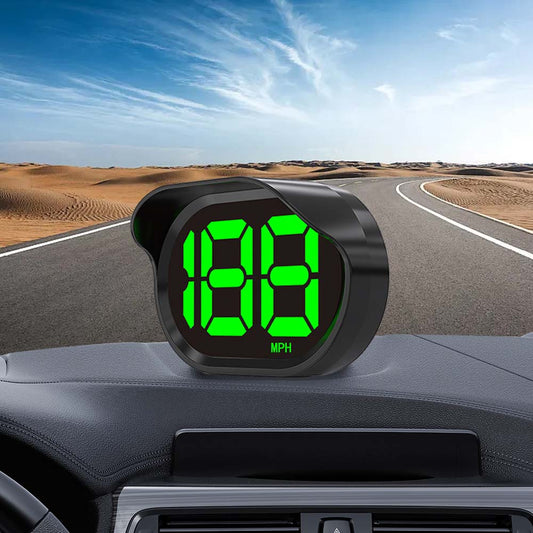
GPS HUDs calculate speed and position using satellite signals. They power via your car's 12V cigarette lighter socket and require no connection to your vehicle's systems whatsoever.
Compatibility: Universal. If your car has a 12V power socket (virtually every car made in the last 50+ years), a GPS HUD will work. It works with any vehicle — from older gas-powered cars to the newest electric cars.
2. OBD2 HUDs
OBD2 HUDs plug into your car's OBD2 diagnostic port to read engine data. This is where compatibility gets slightly more specific.
Compatibility: Any car with an OBD2 port. In the United States, OBD2 has been mandatory on petrol cars since 2004. In Europe, it became mandatory for petrol cars in 2008.
Bottom line: If your car was manufactured after 2004 (US) or 2008 (EU), it almost certainly has an OBD2 port and will work with an OBD2 HUD.
Where Is the OBD2 Port Located?
The OBD2 port is typically located:
- Under the dashboard on the driver's side
- Near the steering column
- Sometimes behind a small panel or cover
It's a 16-pin trapezoidal connector. If you're unsure, a quick search for "[your car make/model] OBD2 port location" will show you exactly where to find it.
Windshield Compatibility: What to Watch For
While the HUD device itself is universally compatible, your windshield can affect how well the display looks. Here are the key considerations:
Standard Windshields
Most cars have standard laminated glass windshields. These work perfectly with both windshield-projection HUDs and combiner-screen HUDs.
Tinted Windshields
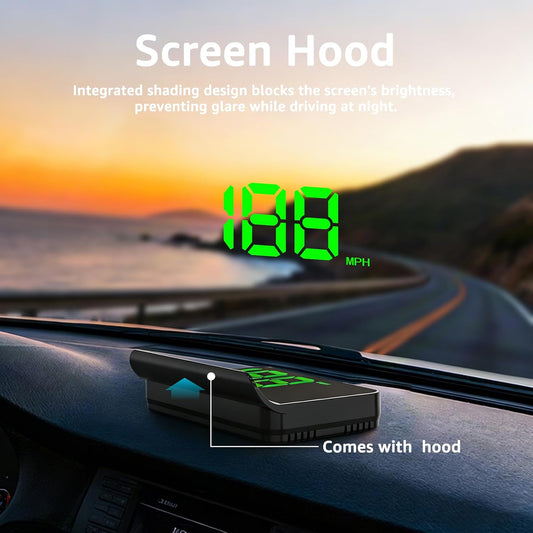
Factory-tinted windshields (common on SUVs and trucks) can reduce the brightness of projected HUD images. If your windshield has a strong tint, opt for a combiner-screen HUD, which uses its own transparent panel rather than projecting onto the glass.
Heated Windshields
Some vehicles have heated windshields with embedded wires. These can cause double-image reflections with projection-type HUDs. Again, a combiner-screen HUD solves this problem entirely.
Steeply Raked Windshields
Sports cars and some coupes have very steeply angled windshields. This can affect the projection angle of windshield-type HUDs. Most modern HUDs include angle adjustment to compensate, but it's worth checking the product specifications.
Does It Work with Electric Vehicles (EVs)?
Yes — with some nuances:
- GPS HUDs: Work perfectly on any EV. No compatibility issues.
- OBD2 HUDs on EVs: Most modern EVs use a modified OBD2 protocol or proprietary systems. Standard OBD2 HUDs may show limited data or not connect at all on these vehicles. GPS HUDs are the safer choice for EV drivers.
- Hybrid vehicles: Most hybrids (Such as for Toyota Prius, for Honda Accord Hybrid, etc.) retain full OBD2 compatibility and work well with OBD2 HUDs.
Does It Work with Older Cars (Pre-2004)?
For vehicles manufactured before 1996 (pre-OBD2 era):
- GPS HUDs: Yes, fully compatible. Just plug into the 12V socket.
- OBD2 HUDs: Not compatible — older vehicles use OBD1 or no diagnostic port at all.
If you drive a classic or vintage car, a GPS HUD is your best option.
Quick Compatibility Reference
| Vehicle Type | GPS HUD | OBD2 HUD |
|---|---|---|
| Cars made after 2004 (US) | ✅ Compatible | ✅ Compatible |
| Cars made after 2008 (EU) | ✅ Compatible | ✅ Compatible |
| Pre-2004 / Classic cars | ✅ Compatible | ❌ Not compatible |
| Electric vehicles (Tesla, etc.) | ✅ Compatible | ❌ Not compatible |
| Hybrid vehicles | ✅ Compatible | ❌ Not compatible |
| Trucks & SUVs | ✅ Compatible | ✅ Compatible |
| Tinted windshield vehicles | ✅ Use combiner screen | ❌ Not compatible |
Installation: How Easy Is It Really?
For both GPS and OBD2 HUDs, installation is designed to be tool-free and beginner-friendly:
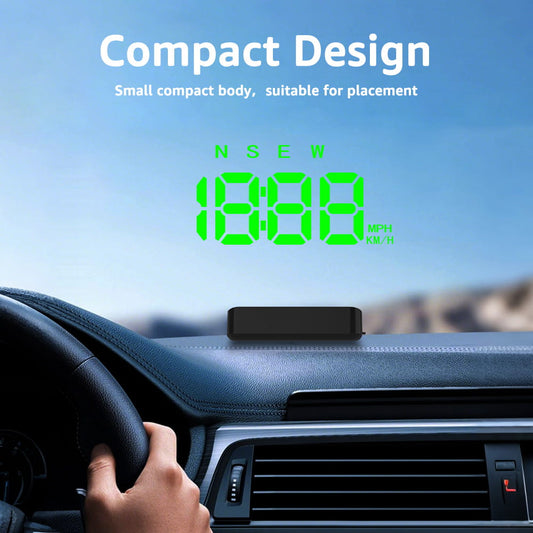
- GPS HUD: Place on dashboard, plug into 12V socket, adjust angle. Done in under 5 minutes.
- OBD2 HUD: Plug the OBD2 connector under the dashboard, route the cable to the display unit on the dashboard, power on. Typically 5–10 minutes.
No drilling, no permanent modifications, no professional installation required.
Final Answer: Will It Work on Your Car?
Almost certainly yes. A GPS HUD works on any car with a 12V socket — which is essentially every car ever made. An OBD2 HUD works on any car manufactured after 2004 in the US or 2008 in Europe, with the exception of some modern EVs.
If you're still unsure, GPS is the safest universal choice. And if you want engine diagnostics too, check your vehicle's OBD2 compatibility before purchasing an OBD2 model.
Have questions about compatibility with your specific vehicle? Browse our HUD collection or contact our team — we're happy to help you find the perfect fit.