From Cockpit to Car: How HUD Technology Went Mainstream
Born in the Cockpit
The heads-up display was never designed for the open road. It was engineered for survival.
In the 1950s, military pilots faced a critical problem: at supersonic speeds, looking down at instruments for even a fraction of a second could be fatal. The solution was to project critical flight data — altitude, speed, horizon line — directly onto the cockpit glass. Eyes stayed forward. Reaction times improved. Lives were saved.
That technology was called the heads-up display (HUD), and it would take decades before it found its way into civilian hands.
The Automotive Industry Takes Notice
By the late 1980s, automotive engineers began experimenting with HUD technology for passenger vehicles. General Motors introduced the first production car HUD in the 1988 Oldsmobile Cutlass Supreme — a simple monochrome display showing vehicle speed on the windshield.
It was a novelty at the time. But the underlying principle was sound: keep the driver's eyes on the road, not the dashboard.
Throughout the 1990s and 2000s, HUDs remained a premium feature reserved for luxury and performance vehicles. The technology was expensive, complex, and tightly integrated into the vehicle's electronics.
The GPS Revolution Changes Everything
The real turning point came with the mass adoption of GPS technology in the 2000s and the smartphone revolution that followed.
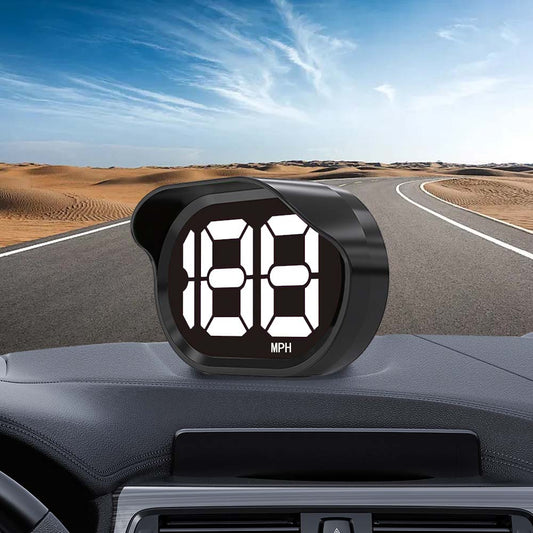
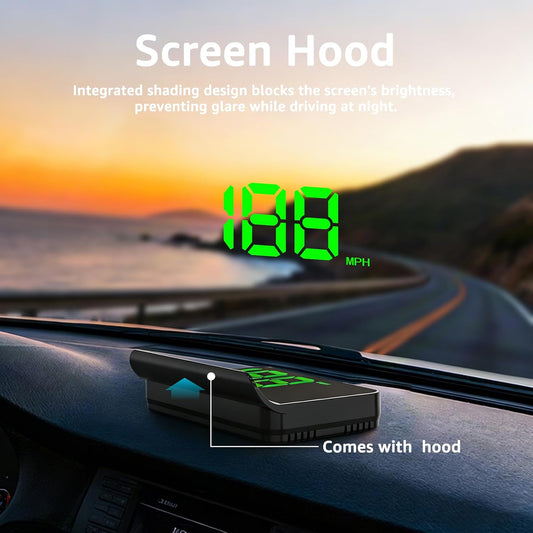
Suddenly, accurate real-time positioning data was available to anyone. Aftermarket GPS HUD devices emerged that could plug into a car's 12V socket, lock onto satellite signals, and project speed and navigation data onto a reflective film placed on the windshield — no factory integration required.
The barrier to entry collapsed. HUD technology was no longer exclusive to luxury car buyers. Any driver, in any vehicle, could access it for a fraction of the cost.
From Niche Gadget to Essential Driving Tool
Today's car heads-up displays are a far cry from the bulky, limited units of the early automotive era. Modern GPS HUDs offer:
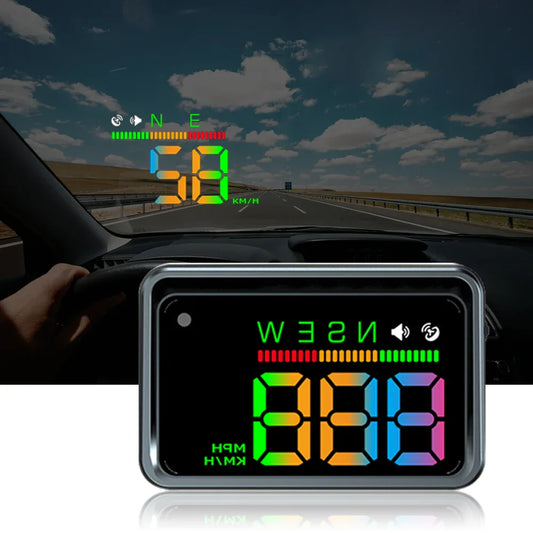
- Bright, high-contrast displays visible in direct sunlight
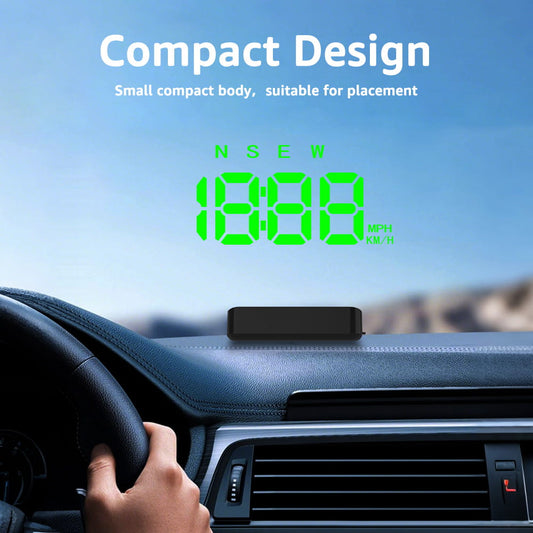
- Multi-data readouts — speed, compass direction, altitude, voltage, and more
- Turn-by-turn navigation integrated with smartphone GPS apps
- OBD2 connectivity for real-time engine diagnostics
- Compact, universal designs that fit any dashboard
What was once a cockpit instrument reserved for fighter pilots is now a practical, affordable safety upgrade for everyday commuters, road trippers, and professional drivers alike.
Why Mainstream Adoption Makes Sense
The case for HUDs has only grown stronger as roads have become more complex and distractions more prevalent. Smartphone use while driving remains one of the leading causes of accidents globally. Navigation apps demand constant visual attention. Speed limit changes are frequent and easy to miss.
A heads-up display addresses all of these challenges simultaneously — keeping critical information in the driver's natural line of sight without requiring them to look away from the road.
It's not a luxury. It's a logical evolution of how we interact with our vehicles.
What's Next for HUD Technology
The next frontier is augmented reality (AR) HUDs — systems that overlay navigation arrows, hazard warnings, and lane guidance directly onto the real-world view through the windshield, aligned with the actual road ahead.
Major automakers are already deploying AR HUD systems in their latest models. As the technology matures and costs decrease, aftermarket AR HUD solutions for existing vehicles are expected to follow.
The trajectory is clear: HUD technology will become as standard in vehicles as seatbelts and rearview mirrors.
Final Thoughts
From classified military hardware to a consumer product you can order online and install in minutes — the journey of HUD technology is a remarkable story of innovation filtering down from the extraordinary to the everyday.
If you haven't yet experienced driving with a heads-up display, you're driving with one less tool than modern roads demand.
Explore our range of GPS heads-up displays and see what you've been missing.
Cover image generated by AI for illustrative purposes only.