

Is Your Speedometer Lying? Why You Need a Digital GPS Speedometer
Can You Trust Your Speedometer?
Most drivers assume their car's speedometer is accurate. But here's a surprising truth: factory-installed analog speedometers can be off by 5–10% — sometimes more. That means if your dashboard reads 60 mph, you could actually be traveling at 63–66 mph. In a world where speed cameras and traffic laws leave zero margin for error, that gap matters.
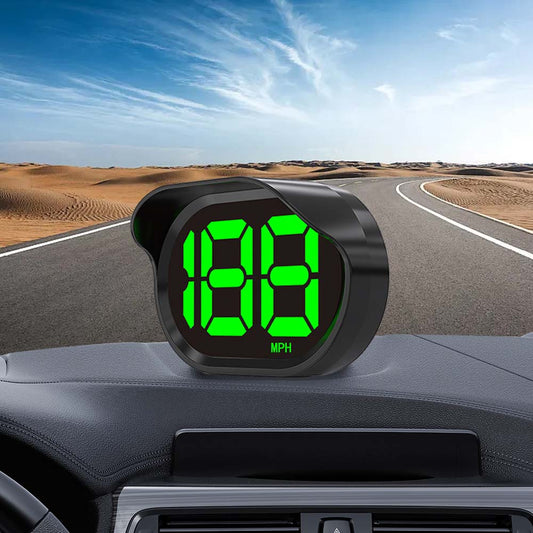
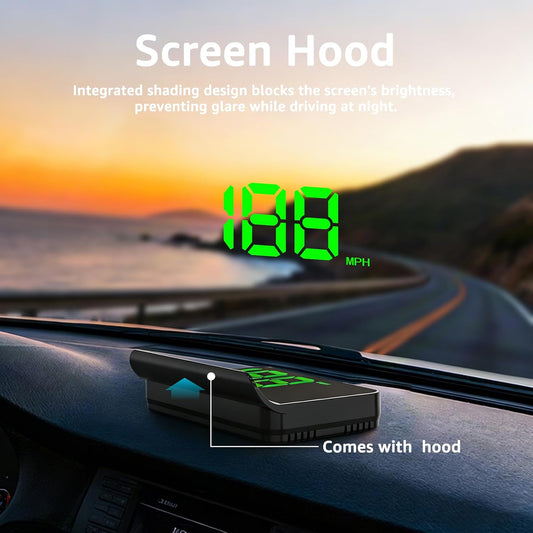
So what's the solution? A GPS digital speedometer — and more specifically, a Head-Up Display (HUD) that projects real-time speed data directly onto your windshield.
Why Traditional Speedometers Are Inaccurate
Analog speedometers measure speed mechanically, using a cable connected to your transmission or wheel hub. Several factors introduce error:
- Tire wear: As tires wear down, their circumference shrinks, causing the speedometer to over-read.
- Tire size changes: Fitting non-stock tires throws off calibration entirely.
- Manufacturing tolerances: Automakers legally allow up to ±10% deviation at the factory level.
- Aging components: Cables and sensors degrade over time, increasing inaccuracy.
Even modern electronic speedometers that read from wheel speed sensors are subject to tire-size errors and sensor drift.
How GPS Speedometers Work
A GPS digital speedometer calculates your speed by measuring the time it takes to travel between two GPS satellite coordinates. This method is:
- Independent of your vehicle's mechanical systems — no cables, no sensors, no drift.
- Accurate to within ±1 mph under open-sky conditions.
- Self-calibrating — it doesn't matter what tires you run or how worn they are.
When integrated into a HUD display, this GPS speed data is projected at eye level, reducing the need to look down at your dashboard — improving both accuracy and safety.
GPS vs. Analog: A Real-World Comparison
| Feature | Analog Speedometer | GPS HUD Speedometer |
|---|---|---|
| Accuracy | ±5–10% | ±1 mph |
| Affected by tire size | Yes | No |
| Real-time update rate | Mechanical lag | 1–5 times per second |
| Additional data | Speed only | Speed, compass, altitude, time |
| Eye-level display | No | Yes (HUD) |
Who Needs a GPS Digital Speedometer?
A GPS HUD speedometer isn't just for tech enthusiasts. It's a practical upgrade for:
- Daily commuters who want to avoid speeding tickets caused by inaccurate factory gauges.
- Long-distance drivers who need reliable speed data on highways and unfamiliar roads.
- Off-road and 4x4 drivers running oversized tires that throw off stock calibration.
- Track day enthusiasts who need precise speed data for performance analysis.
- Commercial drivers who must comply with strict speed regulations.
What to Look for in a GPS HUD Speedometer
Not all GPS HUD displays are created equal. Here's what to prioritize when choosing one:
- GPS chip quality: Look for multi-satellite support GPS for faster lock and better accuracy.
- Update frequency: A refresh rate of at least 1Hz (ideally 5Hz) ensures smooth, real-time readings.
- Display brightness: The HUD must be visible in direct sunlight — look for 10,000+ cd/m² brightness.
- Additional metrics: Compass, altitude, trip distance, and voltage monitoring add real value.
- Easy installation: Plug & Play — a good GPS HUD should plug into your 12V port and be ready in minutes.
Upgrade Your Drive with KUOWEIHUD
At KUOWEIHUD, we design GPS head-up displays built for precision, clarity, and durability. Our HUD speedometers feature:
- High-sensitivity multi-constellation GPS receivers
- Ultra-bright displays visible in all lighting conditions
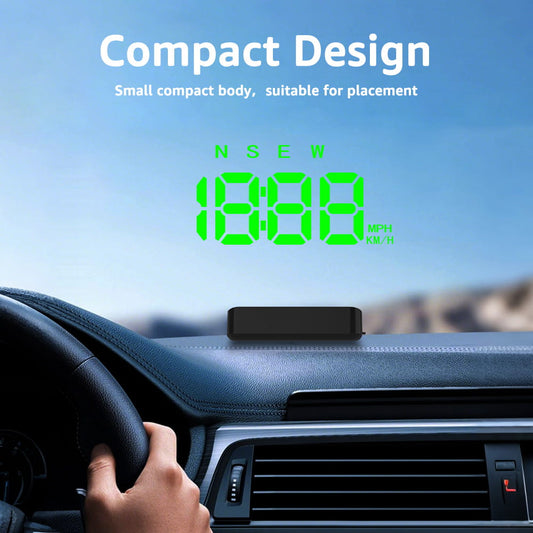
- Real-time speed, compass, altitude, and time readouts
- Plug-and-play installation — no tools required
Whether you're navigating city streets or pushing limits on the open road, KUOWEIHUD gives you the accurate, at-a-glance data you need to drive smarter and safer.
👉 Explore our KUOWEIHUD GPS Speedometer and find the right fit for your vehicle.




1 comment
I want one that’s rechargeable and round that I can mount in a classic car without it disturbing the classic look. Cables across the dash are not wanted.