Reading the Roll: A Beginner's Guide to Offroad Inclinometers
What Is an Offroad Inclinometer?
An offroad inclinometer — also called a tilt meter or roll/pitch gauge — measures the angle of your vehicle relative to the ground. It displays two key axes: pitch (front-to-back tilt) and roll (side-to-side tilt). For offroad drivers, this data is critical for avoiding rollovers, navigating steep descents, and reading terrain before committing to a line.
Why Every Offroader Should Use One
Experienced trail drivers develop an instinct for tilt over time — but instinct has limits. A digital inclinometer gives you real-time, objective data so you can make confident decisions on unfamiliar terrain. Key benefits include:
- Rollover prevention — Know your vehicle's tilt threshold before you exceed it
- Descent control — Monitor pitch angle on steep downhills to maintain traction
- Recovery planning — Assess lean angle when a vehicle is stuck or high-centered
- Driver training — Build awareness of safe operating angles for new offroaders
Understanding the Numbers
Most stock SUVs and trucks begin to feel unstable around 40–45° of roll, though the actual rollover threshold varies by vehicle height, load, and tire width. As a general reference:
- 0–15° — Normal driving, minimal risk
- 15–30° — Moderate terrain, maintain awareness
- 30–40° — Challenging; reduce speed, choose your line carefully
- 40°+ — High risk zone; stop and reassess
Pitch angles follow similar logic. A steep descent of 30°+ demands low-range gearing and engine braking.
Types of Offroad Inclinometers
There are three main formats available today:
- Standalone digital gauges — Dedicated dash-mount units with clear LED or LCD displays. Best for dedicated offroad builds.
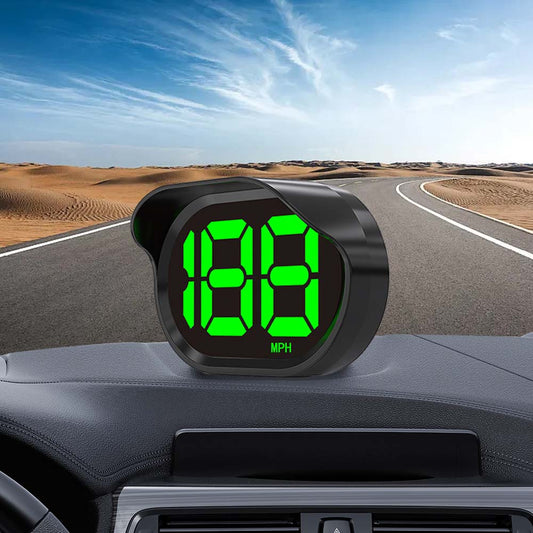
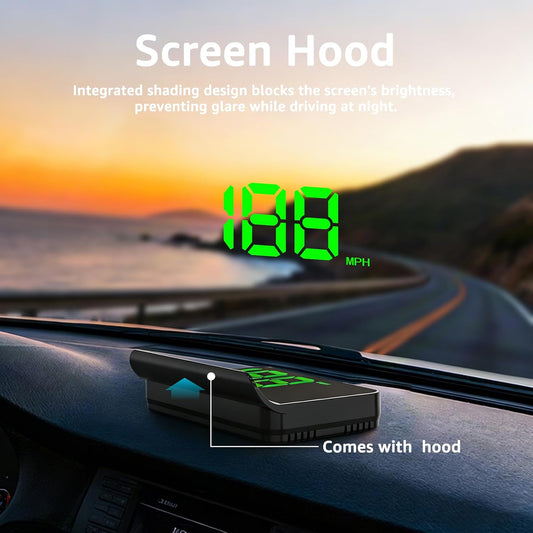
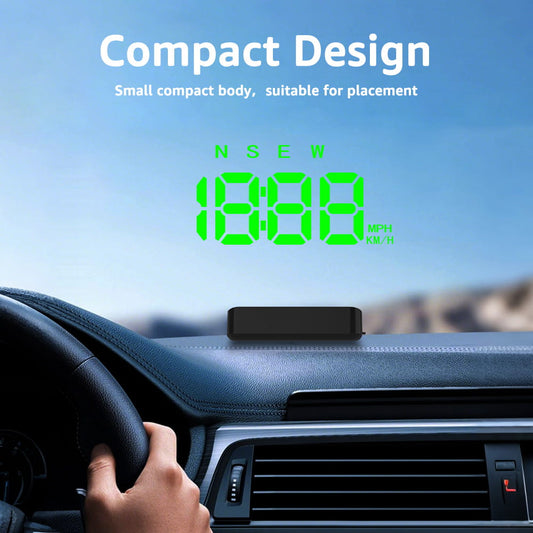
- HUD-integrated displays — Head-up display units that project tilt data onto your windshield alongside speed and navigation. Ideal for daily drivers who also trail ride.
- App-based sensors — Bulit-in Bluetooth accelerometers paired with a smartphone app. Lower cost, but dependent on phone placement accuracy.
How to Mount and Calibrate Your Inclinometer
Accurate readings start with proper installation:
- Mount on a level surface — Park on flat ground before calibrating. Any pre-existing lean will skew your baseline.
- Secure the sensor firmly — Vibration causes drift. Use the included bracket or a rigid dash mount.
- Calibrate to zero — Most units have a one-button calibration. Do this every time you swap vehicles or remount the unit.
- Position for visibility — The display should be readable at a glance without taking your eyes off the trail.
Pairing Your Inclinometer with a HUD
Modern multi-function HUD devices combine inclinometer data with GPS speed, compass heading, altitude, and trip data — all projected onto your windshield or displayed on a dedicated screen. This eliminates the need to look down at a gauge cluster mid-trail, keeping your eyes on the terrain where they belong.
If you spend time both on-road and off, a HUD with built-in tilt sensing is one of the most practical upgrades you can make to your vehicle's cockpit.
Final Thoughts
An offroad inclinometer is a simple tool with a significant safety impact. Whether you're a weekend trail rider or a serious overlander, knowing your vehicle's angle in real time removes guesswork from some of the most consequential decisions you'll make on the trail. Start with a quality unit, calibrate it correctly, and let the data guide your line choice.