Eyes Forward, Not Down: How a Head-Up Display Makes You a Safer Driver
The Hidden Danger of Looking Down While Driving
Every time you glance down at your dashboard — even for just two seconds — your car travels roughly 55 meters at highway speed. That's 55 meters of blind driving. Multiply that by the dozens of times you check your speed, navigation, or fuel level on a typical commute, and the risk becomes impossible to ignore.
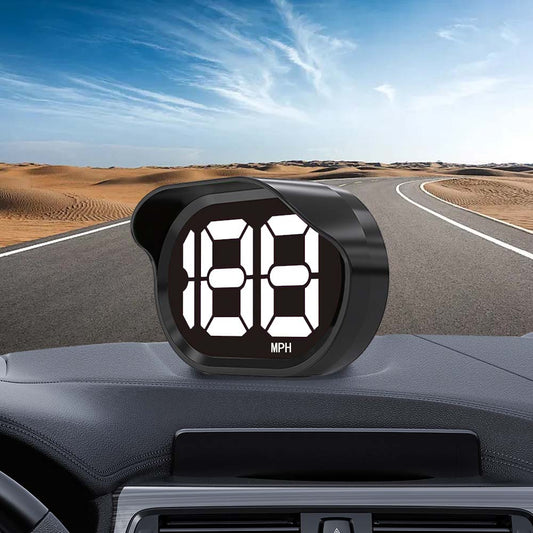
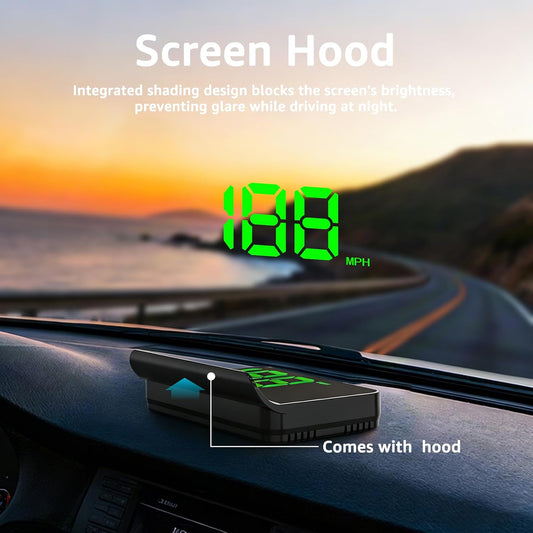
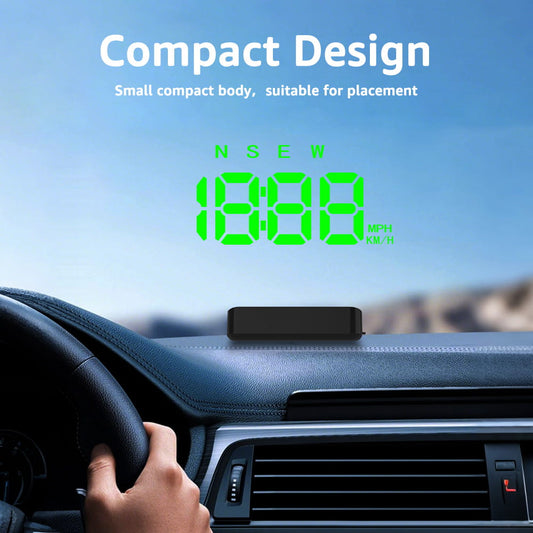
A Head-Up Display (HUD) solves this problem by projecting critical driving information directly onto your windshield or a transparent screen in your line of sight. The result? Your eyes stay on the road where they belong.
What Is a Head-Up Display (HUD)?
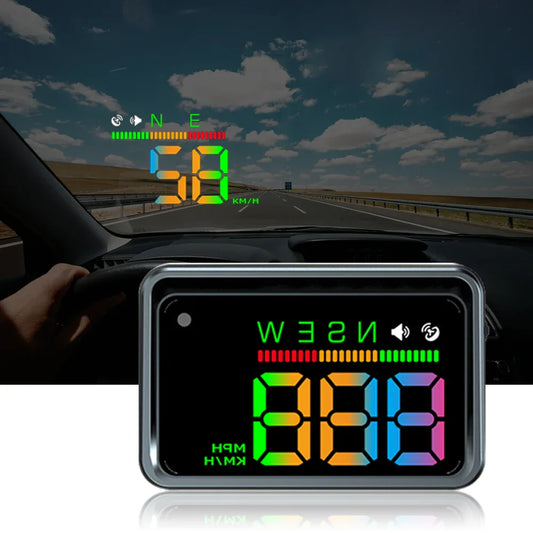
Originally developed for military fighter jets, HUD technology has made its way into everyday vehicles. A car HUD projects real-time data — such as speed, navigation arrows, engine RPM, and alerts — onto a transparent surface at eye level. You get the information you need without ever shifting your gaze from the road ahead.
Modern aftermarket HUDs connect via OBD-II port or GPS and are compatible with virtually any vehicle, making this safety upgrade accessible to every driver.
5 Ways a HUD Makes You a Safer Driver
1. Eliminates Dangerous Glances at the Dashboard
The National Highway Traffic Safety Administration (NHTSA) identifies distracted driving as a leading cause of accidents. A HUD keeps your speed, RPM, and alerts visible without requiring you to look away from traffic.
2. Provides Real-Time Speed Monitoring
Speeding is a factor in nearly one-third of all traffic fatalities. With a HUD displaying your speed prominently in your field of vision, you're far more likely to notice — and correct — unintentional speed creep before it becomes a problem.
3. Delivers Navigation Without Distraction
Fumbling with a phone or glancing at a mounted GPS screen is a recipe for disaster. A HUD overlays turn-by-turn directions directly in your sightline, so you never miss a turn and never take your eyes off the road.
4. Alerts You to Engine and Vehicle Warnings Instantly
Many HUDs connect to your vehicle's OBD-II system and can display fault codes, overheat warnings, and low voltage alerts the moment they occur. Early warnings mean you can respond before a minor issue becomes a roadside emergency.
3. Reduces Driver Fatigue on Long Trips
Constantly shifting your focus between the road and the dashboard is mentally taxing. By consolidating key information into your natural field of view, a HUD reduces cognitive load and helps you stay alert on long drives.
GPS HUD vs. OBD-II HUD: Which Is Right for You?
There are two main types of aftermarket HUDs:
- GPS HUD: Uses satellite data to display speed and basic navigation. Easy to install — just plug into a power source. Ideal for drivers who want a simple, universal solution.
- OBD-II HUD: Plugs into your car's diagnostic port for deeper data including RPM, engine temperature, fuel consumption, and fault codes. Best for drivers who want comprehensive vehicle monitoring.
Both types project information at eye level and dramatically reduce the need to look away from the road.
What to Look for in a Quality HUD
Not all HUDs are created equal. When choosing a head-up display, consider:
- Brightness and visibility: The display must be readable in direct sunlight.
- Display size and clarity: Larger, high-contrast displays are easier to read at a glance.
- Data accuracy: GPS-based speed readings should update in real time with minimal lag.
- Easy installation: Look for plug-and-play designs that don't require professional fitting.
- Adjustable angle and brightness: Every driver and vehicle is different — flexibility matters.
The Bottom Line
A head-up display isn't just a tech gadget — it's a genuine safety tool. By keeping your eyes forward and your attention on the road, a HUD helps you react faster, drive smarter, and arrive safer. Whether you're navigating city traffic or cruising on the highway, the information you need should always be where your eyes already are.
Ready to upgrade your drive? Explore our range of car head-up displays and find the perfect HUD for your vehicle.