Digital GPS Speedometer with Odometer Display: Upgrade Your Dashboard in Minutes
Is Your Factory Dashboard Letting You Down?
Factory dashboards haven't changed much in decades — analog dials, poor sunlight visibility, and zero GPS integration. For drivers who value precision and safety, that's simply not good enough. A digital GPS speedometer with built-in odometer display is the fastest, most affordable way to modernize any vehicle's dashboard without permanent modifications.
In this guide, we'll cover everything you need to know: how these devices work, GPS vs. OBD2 comparison, installation steps, and what to look for before buying.
What Is a Digital GPS Speedometer with Odometer?
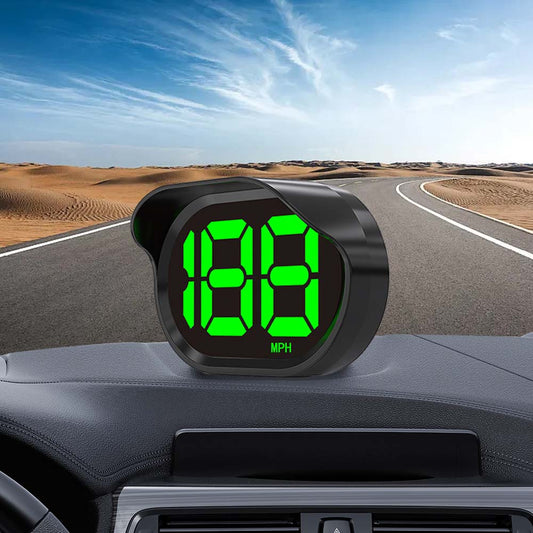
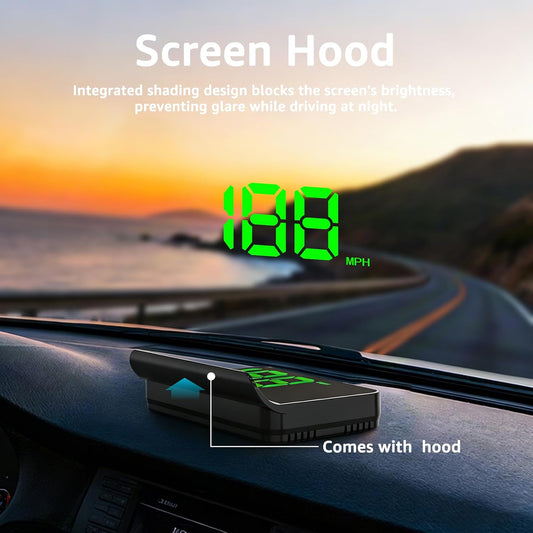
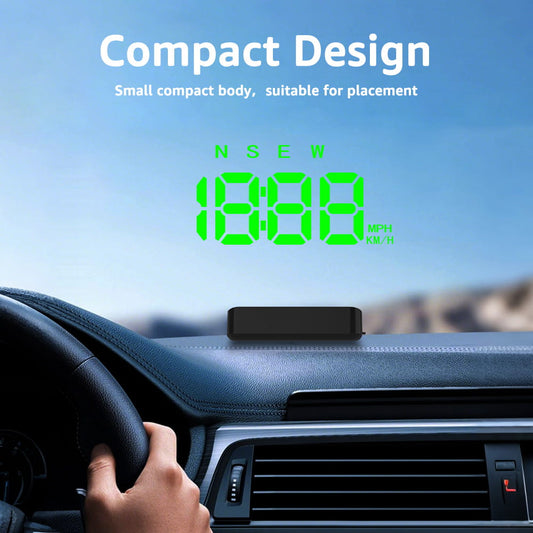
A digital GPS speedometer uses satellite signals to calculate your real-time speed and display it on a bright, easy-to-read screen — often mounted on your dashboard or projected as a heads-up display (HUD) onto your windshield.
The built-in odometer function adds trip tracking capabilities, including:
- Trip A / Trip B distance counters (resettable)
- Total cumulative mileage tracking
- Average speed per journey
- Driving time elapsed
- Max speed recorded per trip
Together, these features give you a complete picture of every drive — without relying on your car's aging factory instruments.
GPS Speedometer vs. OBD2 Speedometer: Which Is Right for You?
Both technologies deliver accurate speed and odometer data, but they work differently. Here's how to choose:
✅ GPS Digital Speedometer
- Universal fit — works on any vehicle, including motorcycles, trucks, RVs, and boats
- No wiring — powered via USB or 12V socket, zero installation complexity
- Satellite accuracy — multi-constellation support (GPS + GLONASS + Beidou) for ±1 km/h precision
- Best for: older vehicles, universal use, or drivers who want zero-hassle setup
✅ OBD2 HUD Speedometer
- ECU-synced data — reads directly from your car's computer for maximum accuracy
- Engine diagnostics — RPM, coolant temperature, fuel consumption, fault codes
- Plug-and-play — connects to the OBD2 port (standard on all vehicles made after 2003)
- Best for: modern vehicles where engine data monitoring is a priority
5 Reasons to Upgrade Your Speedometer Today
- Improved Road Safety — Real-time speed data in your direct line of sight means fewer glances away from the road. Studies show HUD displays reduce driver distraction by up to 40%.
- Greater Accuracy — Factory speedometers can read 3–5% high due to tire wear and calibration drift. GPS units recalibrate continuously via satellite.
- Smarter Trip Tracking — Log distance per journey for expense reports, fuel cost calculations, or service interval planning.
- Works on Any Vehicle — GPS models require no OBD2 port, making them ideal for classic cars, motorcycles, vans, and commercial vehicles.
- Instant, Tool-Free Setup — Most units are operational in under 5 minutes with no drilling, no wiring, and no professional installation needed.
How to Install a GPS Speedometer with Odometer (Step-by-Step)
- Position the display unit on your dashboard — use the included anti-slip mat or suction mount for a secure fit near the windshield.
- Connect to power using the 12V cigarette lighter adapter or USB cable.
- Power on the device and wait 30–60 seconds for GPS satellite lock (indicated by a solid signal icon).
- Adjust display brightness and unit settings (mph or km/h) to your preference.
- Reset Trip A or Trip B odometer at the start of each journey to begin tracking distance.
Pro tip: For best GPS accuracy, position the unit where it has a clear view of the sky through the windshield — avoid placing it behind tinted glass or metallic window film.
Key Features to Look for When Buying
- Brightness: Minimum 5,000 cd/m² for clear daytime visibility — 8,000+ cd/m² is ideal for direct sunlight
- Display size: 4"–7" screens offer the best balance of readability and dashboard footprint
- Satellite systems: Multi-constellation (GPS + GLONASS + Beidou) for faster lock and higher accuracy
- Data fields: Speed, trip odometer (A/B), max speed, driving time, voltage, compass heading
- Build quality: Anti-glare coating, wide temperature tolerance (-20°C to 70°C), and durable housing
- Alert functions: Overspeed warning and fatigue driving reminder for long-haul safety
Who Benefits Most from a GPS Speedometer with Odometer?
- Daily commuters who want accurate speed data and trip logging without relying on a phone
- Long-distance drivers who need fatigue alerts, average speed tracking, and mileage logs
- Classic car owners whose factory speedometers are inaccurate or non-functional
- Fleet and commercial drivers who need reliable trip distance records for reporting
- Motorcycle riders looking for a weatherproof, GPS-accurate speed display
Our Top Picks: KUOWEIHUD F2 & F6
Not sure which model to choose? Here are our two most popular GPS speedometers with odometer display — trusted by drivers worldwide.
🏆 KUOWEIHUD F2 — Best for Everyday Drivers
The KUOWEIHUD F2 is a compact, feature-packed GPS speedometer designed for daily use. It delivers accurate real-time speed, trip odometer tracking, altitude display, and time — all on a bright, easy-to-read screen.
- ✔ Based on GPS satellite accuracy
- ✔ Trip A / Trip B resettable odometer
- ✔ Altitude and time display
- ✔ Speed alarm & fatigue driving reminder
- ✔ Plug-and-play, no installation required

🏆 KUOWEIHUD F6 — Best for Power Users & Off-Road
The KUOWEIHUD F6 takes it further with a large 6.8" LCD screen and multi-function gauge capabilities. Ideal for drivers who want more data — including an off-road inclinometer for 4WD and adventure driving.
- ✔ 6.8" high-brightness LCD display
- ✔ GPS speedometer + odometer
- ✔ Off-road inclinometer (pitch & roll angle)
- ✔ Multi-function car gauge dashboard
- ✔ Suitable for cars, trucks, SUVs, and off-road vehicles

Ready to Upgrade Your Dashboard?
A digital GPS speedometer with odometer display is one of the smartest, most cost-effective upgrades any driver can make. Accurate, safe, and installed in minutes — it's the modern alternative to an outdated factory gauge cluster.
Cover image generated by AI for illustrative purposes only.