HUD vs. Speedometer: Which Is More Accurate for Daily Driving?
Every car has a speedometer — but not every driver trusts it completely. If you've ever noticed your GPS showing a slightly different speed than your dashboard, you're not imagining things. With the rise of aftermarket Head-Up Displays (HUDs), many drivers are asking: which is actually more accurate for daily driving — a traditional speedometer or a modern HUD?
Let's dig into how each works, where they differ, and which one you should rely on behind the wheel.
How a Traditional Speedometer Works
Your car's built-in speedometer measures speed mechanically or electronically by tracking the rotation of the drivetrain or wheel sensors. Specifically, it reads data from the transmission output shaft or wheel speed sensors (part of the ABS system) and converts that into a speed reading on your dashboard.
Key characteristics:
- Measures wheel rotation speed, not actual ground speed
- Can be affected by tire size changes (larger or smaller tires than stock)
- Legally required to read at or slightly above actual speed in most countries
- Typically reads 2–5% higher than your true speed
That last point is important: most manufacturers intentionally calibrate speedometers to read slightly high as a safety and legal buffer. So if your speedometer says 60 mph, you might actually be doing 57–58 mph.
How a GPS-Based HUD Works
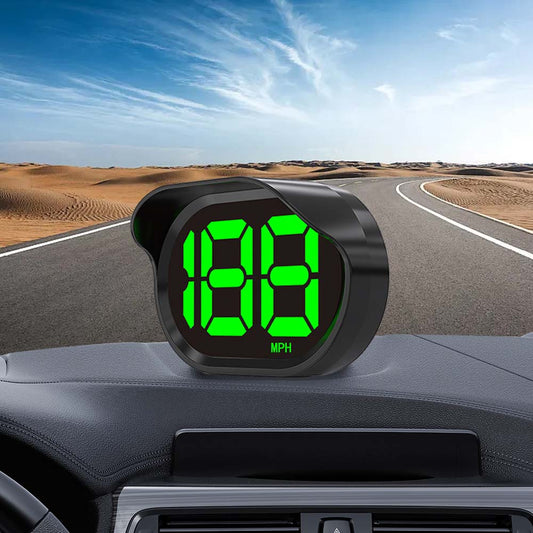
A GPS Head-Up Display calculates your speed by measuring how quickly your position changes over time using satellite signals. This is called "ground speed" — your actual speed relative to the Earth's surface.
Key characteristics:
- Measures true ground speed via satellite triangulation
- Not affected by tire size, wheel slip, or drivetrain wear
- Accuracy depends on GPS signal quality (typically ±1–2 km/h)
- May lag slightly in tunnels or areas with poor satellite reception
- Updates several times per second on modern units
How an OBD2 HUD Works
OBD2-connected HUDs pull speed data directly from your car's Engine Control Unit (ECU) via the OBD2 port. This is the same data your mechanic reads when diagnosing your car.
Key characteristics:
- Reads the same speed signal as your dashboard speedometer
- Subject to the same calibration offsets as your built-in gauge
- Also provides RPM, engine temperature, fuel data, and fault codes
- Works indoors and in tunnels (no GPS needed)
Accuracy Comparison: HUD vs. Speedometer
| Feature | Dashboard Speedometer | GPS HUD | OBD2 HUD |
|---|---|---|---|
| Speed Source | Wheel/drivetrain sensors | GPS satellites | ECU / OBD2 port |
| Typical Accuracy | +2–5% (reads high) | ±1–2 km/h (true speed) | Same as speedometer |
| Affected by Tire Size | Yes | No | Yes |
| Works Without Signal | Yes | No (needs GPS) | Yes |
| Real-Time Updates | Yes | Yes (multi/sec) | Yes |
| Additional Data | No | Navigation, altitude | Engine diagnostics |
Which Is More Accurate?
For true ground speed, a GPS HUD wins. It measures your actual speed independent of your vehicle's mechanical systems, making it the most objectively accurate reading available to everyday drivers.
However, "accurate" doesn't always mean "most useful." Here's how to think about it:
- Use a GPS HUD if you want to know your real speed, catch speedometer discrepancies, or drive in areas with strict speed enforcement.
- Use an OBD2 HUD if you want your speed reading to match your dashboard (for consistency) plus access to engine diagnostics.
- Trust your dashboard speedometer for general awareness — it's reliable enough for everyday driving, just remember it likely reads slightly high.
Does It Matter for Daily Driving?
For most drivers, the 2–5% difference between a GPS HUD and your speedometer is minor in practice. At 60 mph, that's a difference of just 1–3 mph. However, it can matter in specific situations:
- Speed camera zones: Knowing your true speed helps you stay precisely within limits.
- Modified vehicles: If you've changed tire sizes, your speedometer may be significantly off — a GPS HUD corrects for this.
- Long highway drives: Small speed differences add up over time and can affect fuel efficiency calculations.
Final Verdict
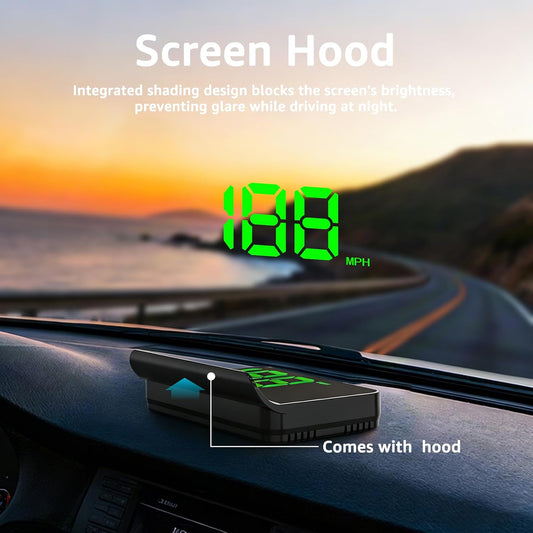
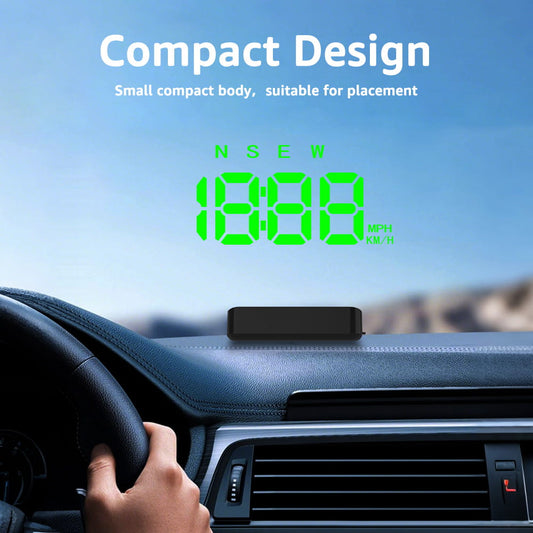
A GPS-based HUD is technically more accurate than a traditional speedometer for measuring true ground speed. An OBD2 HUD matches your dashboard reading but adds valuable diagnostic data. Both types of HUDs offer a major practical advantage over a standard speedometer: they keep the information in your line of sight, reducing distraction and improving safety.
Whether you prioritize raw accuracy or diagnostic depth, adding a HUD to your daily driver is a smart upgrade that pays for itself in safety and awareness.
Ready to find the right HUD for your car? Browse our full range of GPS and OBD2 Head-Up Displays — built for drivers who demand precision.
Cover image generated by AI for illustrative purposes only.