Is a Car Head-Up Display Worth It? The Pros and Cons for Daily Drivers
Introduction
If you've ever glanced down at your dashboard while driving and thought, "There has to be a better way," you're not alone. Car Head-Up Displays (HUDs) have been gaining popularity among daily drivers who want a smarter, safer driving experience. But are they really worth the investment? Let's break down the pros and cons so you can decide for yourself.
What Is a Car Head-Up Display?
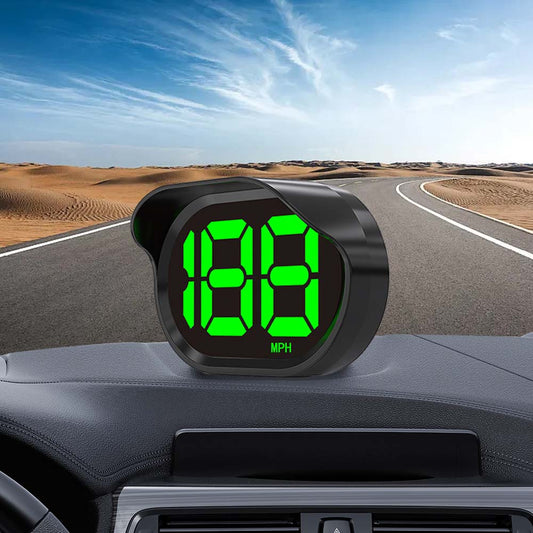
A Head-Up Display (HUD) projects key driving information — such as speed, navigation directions, engine warnings, and more — directly onto your windshield or a transparent screen in your line of sight. Originally a feature reserved for luxury and sports cars, HUDs are now available as affordable aftermarket devices compatible with virtually any vehicle.
The Pros of a Car HUD
1. Enhanced Driving Safety
The biggest advantage of a HUD is safety. By keeping critical information in your field of vision, you spend less time looking away from the road. Studies show that even a 2-second glance at your dashboard significantly increases accident risk — a HUD helps eliminate that risk.
2. Real-Time Speed Monitoring
GPS-based HUDs provide accurate, real-time speed readings that are often more precise than your car's built-in speedometer. This is especially useful for avoiding speeding tickets and staying aware of your pace in school zones or construction areas.
3. Turn-by-Turn Navigation at a Glance
No more squinting at your phone mount or glancing at the center console. A HUD displays navigation prompts right in front of you, making it easier to follow directions without distraction — particularly helpful in unfamiliar cities or complex highway interchanges.
4. OBD2 Diagnostics (for OBD2 HUDs)
Advanced HUD models that connect via OBD2 port can display engine data like RPM, coolant temperature, fuel consumption, and fault codes. This gives everyday drivers a window into their vehicle's health without needing a mechanic's scanner.
5. Works with Any Car
Unlike factory-installed HUDs that are limited to specific makes and models, aftermarket HUDs are universally compatible. Whether you drive a 2005 sedan or a 2024 SUV, you can enjoy HUD technology without buying a new car.
6. Easy Installation
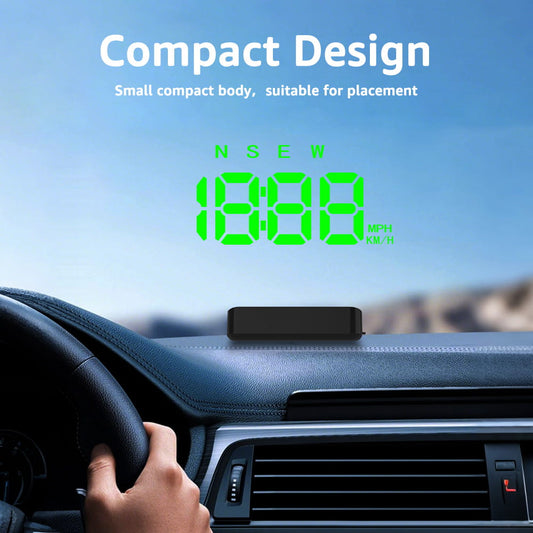
Most aftermarket HUDs plug into your OBD2 port or connect via GPS and power through your car's 12V socket. Setup typically takes under 10 minutes — no professional installation required.
The Cons of a Car HUD
1. Upfront Cost
Quality HUDs range from $30 to $200+ depending on features. While this is far less than a new car with a built-in HUD, it's still an added expense. However, for the safety and convenience benefits, most users find it a worthwhile investment.
2. Glare and Visibility Issues
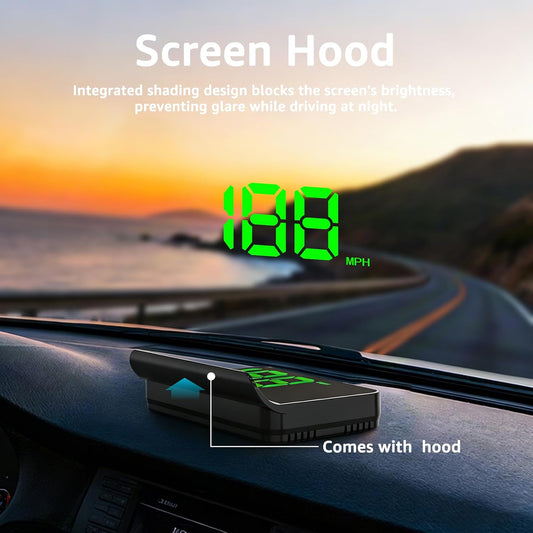
In bright sunlight, some HUD displays can be harder to read. Lower-quality units may wash out in direct sunlight. Look for models with high-brightness displays and anti-glare screens to mitigate this issue.
3. Learning Curve
It may take a few days to get used to reading information projected in your line of sight. Some drivers initially find it distracting, though most adapt quickly and find it more intuitive than looking down.
4. GPS Accuracy Dependency
GPS-based HUDs rely on satellite signal, which can be less accurate in tunnels, dense urban areas, or remote regions. OBD2-connected HUDs avoid this issue by reading data directly from the vehicle's computer.
5. Windshield Compatibility
Some windshields with special coatings (e.g., heated or tinted glass) may cause double-image reflections on reflective-type HUDs. In these cases, a combiner-screen HUD (which uses a separate transparent panel) is a better option.
Who Should Buy a Car HUD?
A HUD is an excellent choice for:
- Daily commuters who want to stay focused on the road
- Long-distance drivers who rely heavily on navigation
- Tech-savvy drivers who want real-time vehicle diagnostics
- Safety-conscious drivers looking to minimize distraction
- Rideshare and delivery drivers who need constant navigation and speed awareness
Final Verdict: Is It Worth It?
For most daily drivers, a car HUD is absolutely worth it. The safety benefits alone — keeping your eyes on the road while staying informed — justify the cost. Add in real-time navigation, speed alerts, and vehicle diagnostics, and you have a device that genuinely improves your driving experience.
The key is choosing the right HUD for your needs. If you want basic speed and navigation, a GPS HUD is a great entry point. If you want deeper vehicle insights, opt for an OBD2-connected model.
Ready to upgrade your drive? Explore our range of premium car HUDs and GPS speedometers designed for modern drivers who demand performance and safety.