OBD2 Speedometer: What It Is, How It Works, and Is It Right for Your Car?
If your car has an outdated, hard-to-read, or inaccurate dashboard speedometer, an OBD2 speedometer can be a simple way to upgrade your driving experience.
An OBD2 speedometer uses your vehicle's OBD2 port to receive real-time vehicle information and display your speed on a clear digital screen. Many models can also display useful information such as engine RPM, coolant temperature, battery voltage, fuel consumption, and diagnostic warnings.
But how does an OBD2 speedometer work? Is it accurate? And should you choose an OBD2 model or a GPS speedometer?
This guide explains everything you need to know before choosing a digital speedometer for your car.
What Is an OBD2 Speedometer?
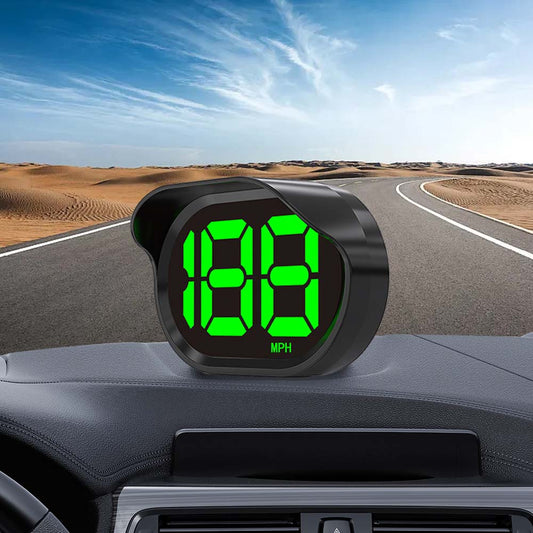
An OBD2 speedometer is a digital speed display that connects to your vehicle through its OBD2 diagnostic port.
OBD2, or On-Board Diagnostics II, is a standardized vehicle diagnostic system used in many cars. The OBD2 port allows compatible devices to access information from the vehicle's electronic control system.
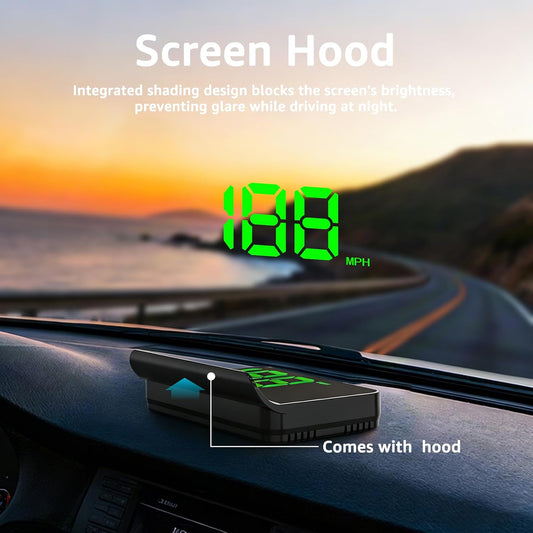
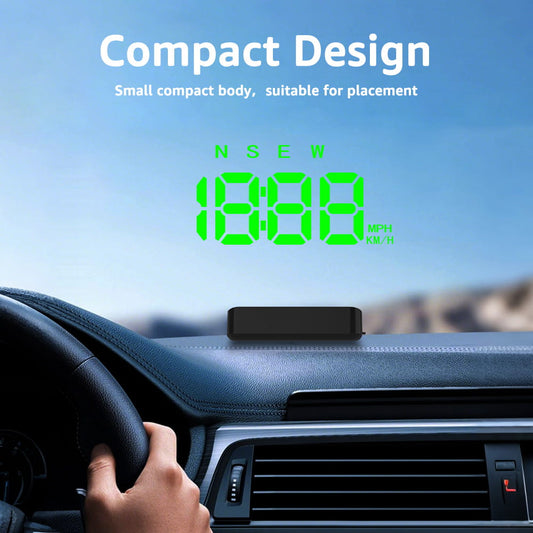
Instead of relying on the traditional analog gauge on your dashboard, an OBD2 digital speedometer can provide a large, easy-to-read numerical speed display.
For drivers who prefer seeing their speed at a glance, this can be especially useful in older vehicles or cars with small or difficult-to-read factory gauges.
How Does an OBD2 Speedometer Work?
Using an OBD2 speedometer is generally straightforward.
1. Locate the OBD2 Port
The OBD2 port is usually located underneath the dashboard, near the driver's side of the vehicle.
2. Connect the OBD2 Cable
Plug the speedometer's OBD2 connector into the vehicle's diagnostic port.
3. Start the Vehicle
Once the engine is running, the device can communicate with the vehicle's onboard computer.
4. Display Vehicle Information
Depending on the model, the device can display information such as:
- Real-time vehicle speed
- Engine RPM
- Battery voltage
- Coolant temperature
- Fuel consumption
- Engine warning information
- Speed alarms
The exact functions depend on the specific OBD2 speedometer and vehicle compatibility.
OBD2 Speedometer vs. Traditional Speedometer
Why would someone install an additional digital speedometer when their vehicle already has one?
There are several reasons.
Easier-to-Read Digital Numbers
Traditional analog speedometers require you to look at a needle and estimate the vehicle's speed.
A digital speedometer displays a numerical value such as:
55 MPH
This can make speed easier to read quickly.
Useful for Older Vehicles
Older cars may have aging dashboards, faded gauges, or speedometers that are difficult to read.
A modern digital display can provide a cleaner and more convenient alternative.
Additional Vehicle Information
Many OBD2 displays do more than show speed. Depending on the device, you may also be able to monitor important vehicle data.
This makes an OBD2 display more like a small vehicle information monitor than a simple speedometer.
What Are the Benefits of an OBD2 Digital Speedometer?
Real-Time Speed Display
One of the main advantages is having your current speed displayed clearly in real time.
This can be particularly useful for drivers who want a larger digital speed reading than their factory dashboard provides.
Easy Installation
Most OBD2 speedometers are designed for simple plug-and-play installation.
There is normally no need to remove the dashboard or modify the vehicle's wiring.
No Smartphone Required
Unlike some smartphone-based speedometer apps, an OBD2 speedometer can operate directly from the vehicle's OBD2 system.
You don't need to mount your phone on the dashboard just to check your speed.
Additional Driving Information
Depending on the model, an OBD2 display may provide several different vehicle parameters in one compact device.
This can be useful for drivers who want more information about their vehicle while driving.
Are OBD2 Speedometers Accurate?
The accuracy of an OBD2 speedometer depends on how the vehicle calculates and reports speed, as well as the specific device being used.
The vehicle's ECU provides speed-related information through the OBD2 system. The digital display then reads and presents that information.
However, several factors can affect the relationship between displayed speed and actual road speed, including:
- Tire size
- Tire wear
- Wheel size
- Vehicle calibration
- ECU information
- Factory speedometer calibration
For drivers who need speed information independent of the vehicle's OBD2 system, a GPS speedometer can be another option.
OBD2 Speedometer vs. GPS Speedometer
One of the most important decisions is choosing between OBD2 and GPS technology.
| Feature | OBD2 Speedometer | GPS Speedometer |
|---|---|---|
| Connection | Vehicle OBD2 port | GPS satellites |
| Installation | Plug into OBD2 port | Usually USB powered |
| Vehicle data | Yes, depending on model | Limited vehicle data |
| Speed source | Vehicle ECU | GPS positioning |
| Engine information | Often available | Usually not available |
| Smartphone required | No | No |
| Best for | Vehicle monitoring | Independent speed tracking |
Choose OBD2 If You Want More Vehicle Data
An OBD2 display can be a good choice if you want to monitor more than speed.
For example, you may want access to engine RPM, voltage, coolant temperature, or diagnostic information.
Choose GPS If You Mainly Want Speed
A GPS digital speedometer is often a better option if your primary goal is simply getting an independent real-time speed reading.
GPS-based speedometers can be particularly useful for older vehicles, classic cars, motorcycles, trucks, and vehicles without a compatible OBD2 system.
Is an OBD2 Speedometer Good for Older Cars?
This depends on the vehicle.
Many modern vehicles use OBD2, but compatibility varies by model year, market, and manufacturer.
If you have a classic or older vehicle, check whether it has a compatible OBD2 port before purchasing an OBD2 speedometer.
If the vehicle does not have a compatible OBD2 system, a GPS speedometer for car may be a better solution.
Who Should Consider an OBD2 Speedometer?
An OBD2 digital speedometer can be useful for:
- Drivers with difficult-to-read dashboards
- Older vehicle owners
- Truck owners
- Car enthusiasts
- DIY automotive enthusiasts
- Drivers who want additional vehicle information
- People looking for a simple digital dashboard upgrade
It can also be a practical option if you want to add modern digital information without replacing the original dashboard.
How to Choose the Best OBD2 Speedometer
Before buying an OBD2 speedometer, consider these factors.
1. Vehicle Compatibility
Always check whether the device supports your vehicle.
Not every OBD2 device works with every vehicle, even if the car has an OBD2 connector.
2. Display Size
A larger display can make speed easier to read while driving.
Look for a display with clear, high-contrast numbers.
3. Display Information
Think about what information you actually need.
If you only want speed, a simple digital speedometer may be enough.
If you want additional vehicle information, consider a multifunction OBD2 display.
4. Speed Unit
If you drive in the United States, you will generally want MPH.
Drivers in other countries may prefer KM/H.
Some digital speedometers allow you to switch between MPH and KM/H.
5. Installation
A plug-and-play design is usually preferable because it minimizes installation time and avoids complicated wiring.
Can an OBD2 Speedometer Replace the Factory Speedometer?
An aftermarket OBD2 speedometer is generally best viewed as an additional display, rather than automatically replacing the factory instrument cluster.
Your vehicle's original speedometer remains part of the factory dashboard system.
An aftermarket display can provide a larger or more convenient digital reading without requiring you to replace the entire dashboard.
Final Thoughts
An OBD2 speedometer is a convenient way to add a modern digital speed display to a compatible vehicle.
Its biggest advantage is that it can provide not only real-time speed but also other vehicle information through the OBD2 system.
However, OBD2 isn't the right choice for every vehicle. If your car doesn't have a compatible OBD2 system—or if you simply want an independent speed reading—a GPS digital speedometer may be a better solution.
For older cars, trucks, classic vehicles, RVs, and motorcycles, choosing the right technology comes down to your vehicle's compatibility and the information you want to see while driving.
Looking for a simple digital upgrade for your vehicle? Explore KUOWEIHUD's OBD2 Speedometers to find a display that fits your driving needs.