What Can an OBD2 Gauge Display Show? Speed, RPM, Engine Data & More
An OBD2 gauge display gives drivers a convenient way to monitor vehicle information on a digital screen. Instead of relying only on the factory dashboard, you can view selected driving and engine data in one place. But what information can an OBD2 gauge display show, and how can it help improve your driving experience?
1. Vehicle Speed
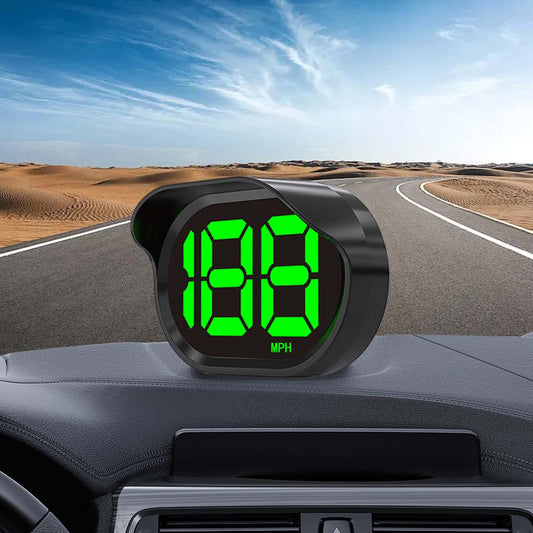
Many OBD2 gauge displays show real-time vehicle speed using data from the vehicle's onboard computer. A digital speed readout can be easier to check at a glance, especially when you want a more visible speed display. Available speed data and accuracy depend on the vehicle and device.
2. Engine RPM
RPM, or revolutions per minute, indicates how quickly the engine is rotating. Monitoring RPM can help drivers understand engine behavior during acceleration, shifting, and everyday driving. This feature can be especially useful for drivers who want more information than a standard speedometer provides.
3. Engine Temperature
Depending on the device and vehicle, an OBD2 display may show engine coolant temperature. Monitoring this information can help drivers recognize unusually high temperatures and respond before an overheating problem becomes more serious.
4. Battery Voltage
Some digital gauge displays can show vehicle system voltage. This information can help drivers monitor the electrical system and notice unusual voltage readings. However, a voltage reading alone cannot diagnose battery or charging-system problems.
5. Fuel Consumption and Other Engine Data
Depending on vehicle support, an OBD2 gauge may display fuel-related information, intake temperature, engine load, throttle position, and other parameters. Not every vehicle or device supports every function, so check the product specifications before purchasing.
6. Warning Alerts and Diagnostic Information
Some OBD2 displays provide alerts when selected values exceed configured limits. Certain models may also support diagnostic trouble codes (DTCs). These features vary by device, and warning alerts or codes should not be treated as a substitute for professional diagnosis.
7. OBD2 Gauge vs. GPS Speedometer
An OBD2 gauge reads supported information from your vehicle's onboard computer. A GPS speedometer calculates speed using satellite signals and typically does not require an OBD2 connection.
If you mainly want to monitor engine data, an OBD2 gauge may be the better choice. If you primarily need a separate speed display, a GPS speedometer may be more suitable, particularly for older vehicles or vehicles with limited OBD2 compatibility.
Choose the Right KUOWEIHUD OBD2 Gauges
An OBD2 gauge display can make important vehicle information easier to access, from speed and RPM to temperature and other supported engine data. The best choice depends on your vehicle's compatibility, the information you need, and the features offered by the device.
Explore KUOWEIHUD OBD2 Gauges to find a digital display that suits your vehicle and driving needs.