Why Drivers Are Replacing Cluster Gauges with Digital Speedometers and HUDs
The Dashboard Is Getting a Digital Makeover
For decades, the analog cluster gauge was the unquestioned centerpiece of every vehicle's dashboard — a ring of dials, needles, and backlit numbers that told you everything from your speed to your fuel level. But something is changing. Drivers across the world are pulling out those legacy gauges and replacing them with sleek digital speedometers and heads-up displays (HUDs). The question is: why?
1. Analog Gauges Were Never That Accurate
Traditional speedometers rely on a mechanical cable or a basic sensor connected to the transmission. The result? Readings that can be off by 5–10% — sometimes more on older vehicles. Digital speedometers, by contrast, pull data directly from GPS satellites or high-precision wheel sensors, delivering real-time speed readings accurate to within 1 mph (or 1 km/h). For drivers who care about precision — whether for safety, fuel efficiency, or avoiding speeding tickets — that difference matters.
2. HUDs Keep Your Eyes on the Road
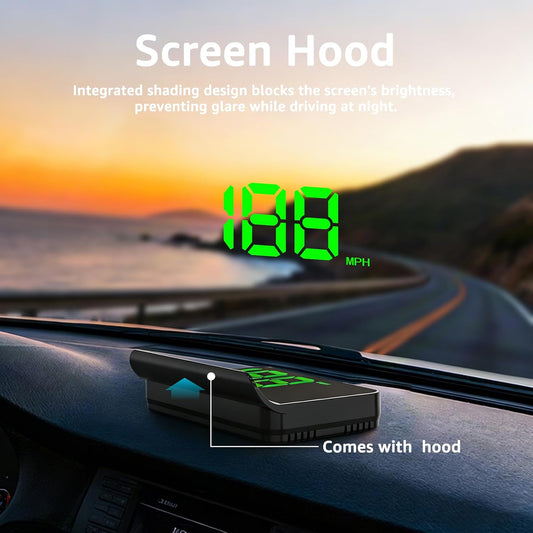
A heads-up display projects your speed, navigation, and other key data directly onto your windshield or a dedicated reflective screen. Instead of glancing down at your dashboard, the information comes to you — right in your line of sight. Studies consistently show that even a 2-second glance away from the road significantly increases accident risk. HUDs eliminate that risk by keeping critical data where your eyes already are.
3. Digital Displays Are Simply Easier to Read
Analog needles require interpretation. Your brain has to process the needle's position relative to the scale and convert that into a number. A digital display just shows you the number — instantly, clearly, and without ambiguity. In bright sunlight, at night, or in adverse weather, a high-contrast digital readout outperforms an analog dial every time.
4. Modern Vehicles Deserve Modern Instruments
Today's cars are packed with advanced driver assistance systems (ADAS), GPS navigation, Bluetooth connectivity, and OBD-II diagnostics. Analog gauges simply can't keep up. Digital speedometers and HUDs can integrate with these systems, displaying turn-by-turn directions, speed limit warnings, lane departure alerts, and more — all on a single, unified screen.
5. Aftermarket Upgrades Are Now Plug-and-Play
You no longer need to buy a new car to get a digital dashboard. Modern aftermarket digital speedometers and HUDs are designed for easy installation — typically plugging into your OBD-II port or using GPS signal with no wiring required. Setup takes minutes, not hours, and the results are immediately visible.
6. The Aesthetic Upgrade Is Real
Let's be honest: a crisp digital display or a projected HUD just looks better. It signals a premium, tech-forward interior — the kind of upgrade that makes every drive feel more refined. For enthusiasts and everyday drivers alike, the visual transformation alone is often reason enough to make the switch.
Digital Speedometer vs. HUD: Which Should You Choose?
Both technologies serve the same core purpose — giving you accurate speed data at a glance — but they differ in how they deliver it:
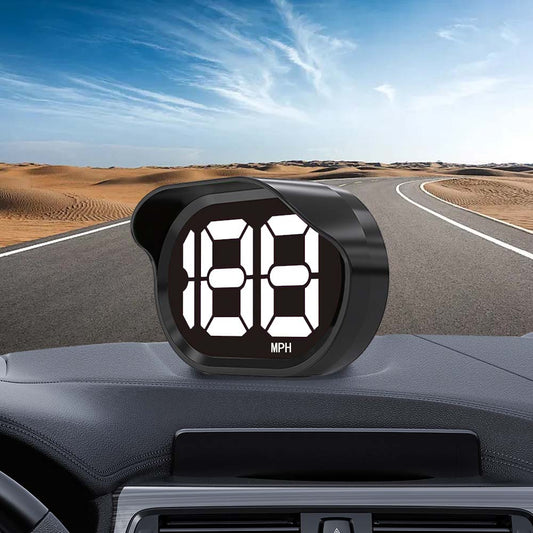
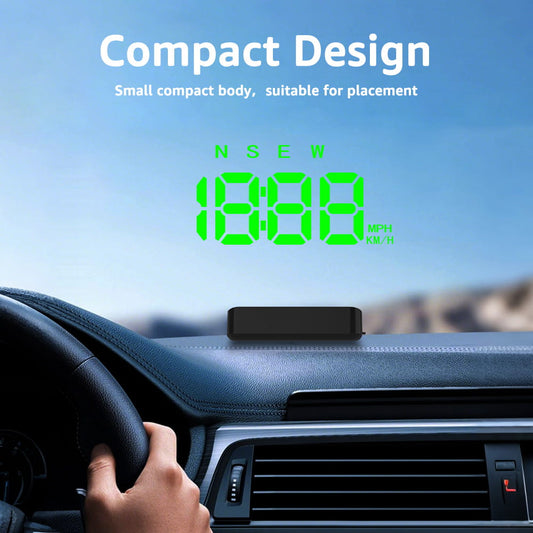
- Digital Speedometers mount on your dashboard and replace or supplement your existing cluster. They're ideal if you want a clean, always-visible display with rich data like altitude, compass heading, or trip stats.
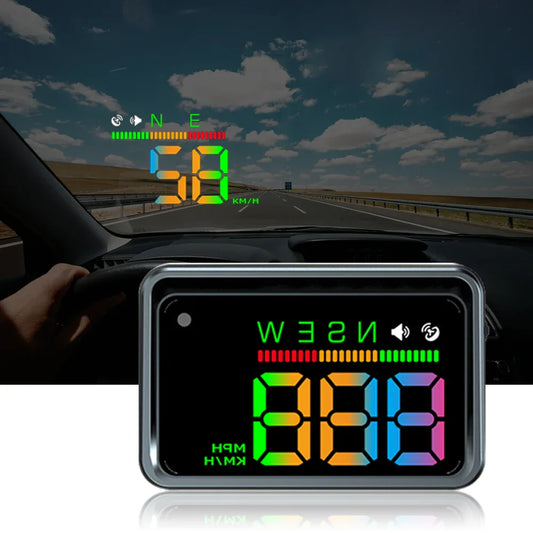
- HUDs project data onto your windshield or a transparent screen, keeping your eyes at road level. They're the better choice if minimizing eye movement is your top priority.
Many drivers choose both — a digital speedometer for comprehensive data and a HUD for at-a-glance speed awareness while driving.
The Bottom Line
Cluster gauges served drivers well for over a century. But in an era of GPS precision, smart vehicle systems, and driver safety technology, digital speedometers and HUDs simply do the job better. They're more accurate, safer, easier to read, and more compatible with the connected vehicles we drive today.
If you haven't made the switch yet, there's never been a better time — or a better selection of aftermarket options — to upgrade your dashboard.
Cover image generated by AI for illustrative purposes only.