Why Every Long-Distance Driver Needs a Heads-Up Display
The Problem With Looking Down
Long-distance driving demands sustained focus. Whether you're covering 300 miles on the interstate or navigating unfamiliar roads on a road trip, every second your eyes leave the road is a second of risk.
Studies show that glancing at a dashboard instrument for just 2 seconds at 60 mph means you've traveled over 175 feet — essentially blind. Multiply that by dozens of speed checks, navigation glances, and fuel reads over a 6-hour drive, and the cumulative distraction is significant.
That's exactly the problem a car heads-up display (HUD) is designed to solve.
What Is a Heads-Up Display?
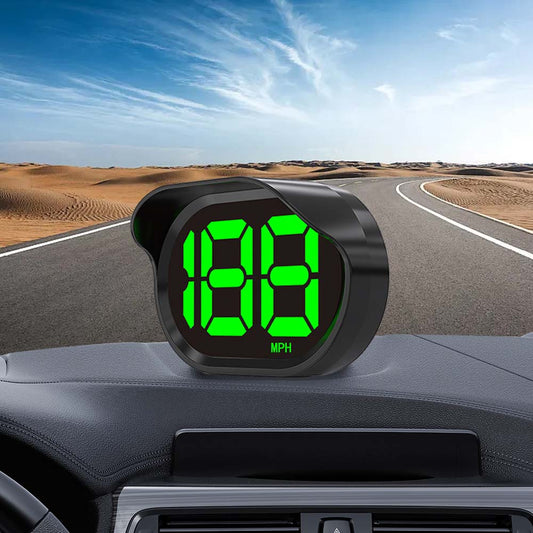
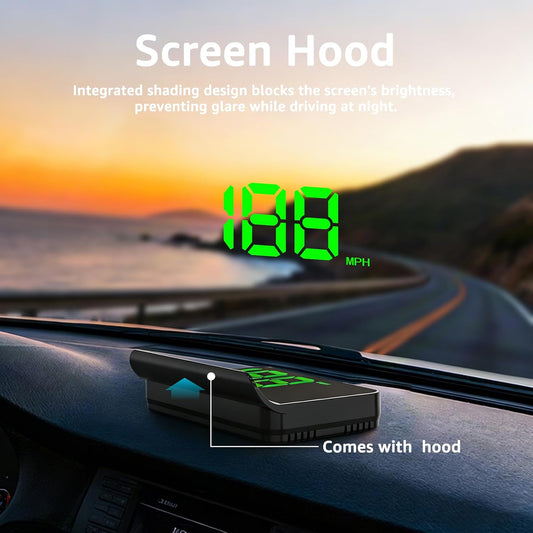
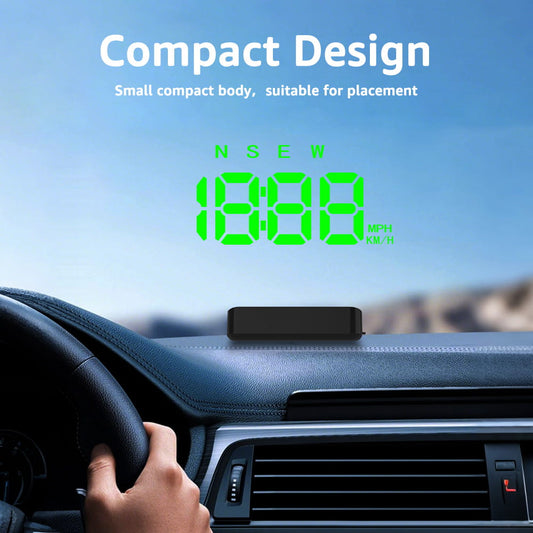
A heads-up display projects key driving data — speed, navigation directions, engine alerts, and more — directly onto your windshield or a dedicated reflective screen. Your eyes stay on the road. The information comes to you.
Originally developed for military fighter jets, HUD technology has evolved into an accessible, affordable upgrade for everyday drivers. Modern GPS HUDs are compact, easy to install, and compatible with virtually any vehicle.
5 Reasons Long-Distance Drivers Need a HUD
1. Reduces Eye Fatigue on Extended Drives
On long hauls, constantly shifting your focal point between the road (far) and the dashboard (near) strains your eyes. A HUD keeps your gaze at a consistent focal distance, reducing eye fatigue — especially critical on night drives or in low-visibility conditions.
2. Real-Time Speed Monitoring Without Distraction
Speed limits change frequently on highways and through towns. A HUD displays your current speed prominently in your line of sight, making it effortless to stay compliant — and avoid costly speeding tickets in unfamiliar regions.
3. Turn-by-Turn Navigation at a Glance
GPS HUDs integrate with navigation data to show upcoming turns and route guidance directly in your field of view. No more fumbling with your phone mount or glancing at a screen mounted low on the dash.
4. Early Warning for Engine and Vehicle Issues
Many OBD2-connected HUDs monitor engine temperature, battery voltage, and fault codes in real time. On a long drive, catching an overheating alert early can be the difference between a minor inconvenience and a roadside breakdown.
5. Keeps You Alert and Engaged
Fatigue is one of the leading causes of long-distance driving accidents. Having a clean, bright display of your speed and route keeps your brain actively engaged with the drive — a subtle but effective countermeasure to highway hypnosis.
GPS HUD vs. OBD2 HUD: Which Is Better for Road Trips?
| Feature | GPS HUD | OBD2 HUD |
|---|---|---|
| Speed source | Satellite (accurate everywhere) | Engine ECU data |
| Navigation support | Yes | Limited |
| Vehicle diagnostics | No | Yes |
| Installation | Plug & play | Requires OBD2 port |
| Best for | Road trips & unfamiliar routes | Daily driving & vehicle monitoring |
For long-distance driving, a GPS HUD is generally the better choice — satellite-based speed is accurate regardless of location, and navigation support is invaluable on unfamiliar routes.
What to Look for in a Long-Distance HUD
- Brightness control — essential for visibility in direct sunlight
- Wide display area — more data visible without clutter
- GPS accuracy — fast satellite lock and reliable signal
- Low power draw — won't drain your 12V socket on extended trips
- Easy mounting — stable on the dash without obstructing your view
Final Thoughts
A heads-up display isn't a luxury gadget — for long-distance drivers, it's a genuine safety tool. It keeps critical information in your line of sight, reduces the physical and mental strain of extended driving, and gives you one less reason to take your eyes off the road.
If you spend serious time behind the wheel, a quality GPS HUD is one of the smartest upgrades you can make to your vehicle.
Ready to find the right HUD for your drive?
Explore our range of GPS heads-up displays →
Cover image generated by AI for illustrative purposes only.